




How to Transition Between Different Floor Heights

How to Transition Between Different Floor Heights
When two rooms have different flooring heights, creating a smooth and safe transition in the doorway is essential. Whether you're joining laminate to tile, vinyl to wood, or carpet to laminate, an uneven floor can look unfinished and even become a trip hazard.
The best solution is to use a door threshold strip designed for height differences, such as a ramp profile. This guide explains how to handle uneven floors and choose the right threshold for a professional finish.
Why Floor Height Differences Happen


Floor height differences are very common and can occur for several reasons:
- Different flooring materials (e.g. tile is thicker than laminate)
- Underlay variations
- Subfloor differences between rooms
- Renovations completed at different times
Even a small height difference of 5–15 mm can cause issues if not properly finished.
Problems Caused by Uneven Floors
If you don’t install a proper transition, you may run into:
- Trip hazards at the doorway
- Visible gaps between floors
- Damaged or chipped flooring edges
- Movement or lifting over time
To avoid these issues, a properly fitted threshold strip is essential.
👉 If you're also dealing with gaps, see:
How to Cover a Laminate Expansion Gap
Best Solution: Ramp Threshold Strips

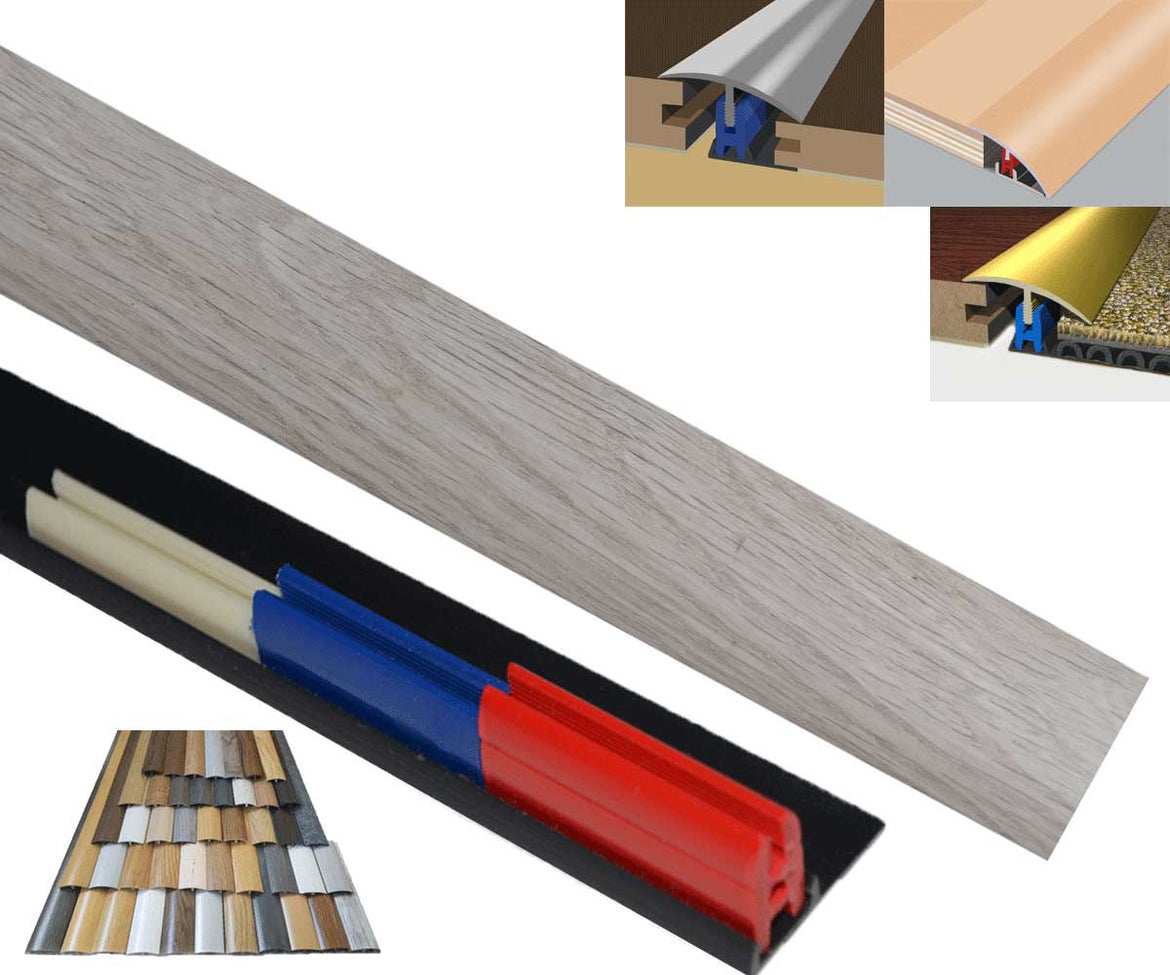
A ramp threshold strip is specifically designed to bridge two floors of different heights.
It features a sloped profile that gradually transitions from the higher floor to the lower one.
Benefits of Ramp Thresholds
- Smooth transition between levels
- Reduces trip hazards
- Protects flooring edges
- Creates a clean, professional finish
- Ideal for high-traffic areas
Ramp strips are one of the most commonly used solutions for doorway transitions involving uneven floors.
Other Threshold Options
Depending on your situation, you may also consider:
Cover Strips
Best for hiding gaps where the height difference is minimal.
👉 Learn more:
How to Join Two Different Floors in a Doorway
T-Bar Thresholds
Used when floors are the same height, not suitable for uneven levels.
👉 See full guide:
Door Threshold Strips Explained: Types & Uses
How to Measure Floor Height Difference
Before choosing your threshold strip, measure the difference between the two floors:
- Place a straight edge across both floors
- Measure the gap from the lower floor to the straight edge
- Record the height difference in millimetres
This ensures you select the correct ramp profile.
Choosing the Right Threshold Strip
When selecting a threshold, consider:
- Height difference – choose a ramp that matches the level change
- Width of the doorway
- Flooring type (laminate, tile, vinyl, carpet)
- Material (PVC or aluminium)
👉 If you're unsure about sizing, read:
What Size Door Threshold Strip Do I Need
How to Install a Threshold Strip for Uneven Floors

Step 1: Prepare the Area
Ensure both flooring edges are clean and secure.
Step 2: Check Expansion Gaps
Leave an expansion gap (typically 8–10 mm) for laminate or wood flooring.
👉 Related guide:
Laminate Flooring Expansion Gap Guide
Step 3: Cut the Threshold to Size
Trim the strip to fit the doorway width using a fine-tooth saw.
Step 4: Fit the Threshold Strip
Depending on the product, installation methods include:
Clip-in systems (recommended)
- No drilling required
- No adhesive needed
- Quick and clean installation
Adhesive fixing
- Suitable for light use
- Easy installation
Screw fixing
- Best for heavy traffic areas
Step 5: Secure and Test
Ensure the strip is firmly in place and provides a smooth transition between floors.
Common Mistakes to Avoid
- Choosing the wrong threshold type (e.g. T-bar for uneven floors)
- Not measuring height difference correctly
- Skipping expansion gaps
- Using weak fixing methods in high-traffic areas
Avoiding these mistakes ensures a longer-lasting and better-looking finish.
Why Clip-In Threshold Systems Are Ideal
Modern clip-in threshold systems are becoming the preferred choice because they:
- Require no drilling or glue
- Allow for natural floor movement
- Provide a secure, professional fit
- Are quick and easy to install
They are especially useful for DIY installations and reduce the risk of damaging flooring.
Final Thoughts
Transitioning between different floor heights doesn’t have to be difficult. By choosing the right ramp threshold strip, you can create a smooth, safe, and visually appealing doorway finish.
Whether you're joining laminate to tile, vinyl to wood, or carpet to laminate, the correct threshold solution will protect your flooring and improve the overall look of your space.