


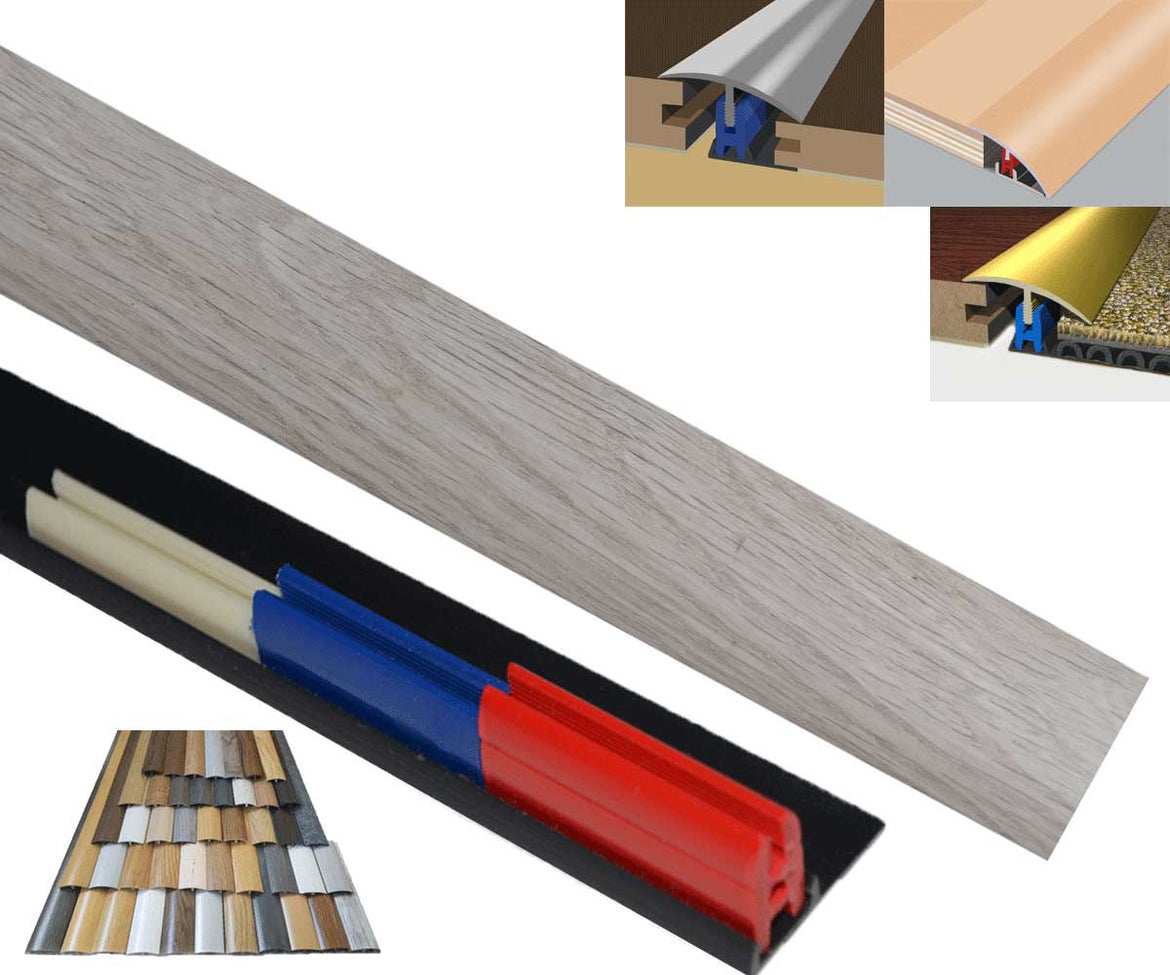

Adhesive vs Screw-Fix Thresholds: Which Is Better?

Choosing the right door threshold strip isn’t just about appearance—it can affect how easy your flooring is to install, how long it lasts, and even whether it’s suitable for modern features like underfloor heating.
Two of the most common options are adhesive (clip system) thresholds and traditional screw-fix thresholds. But which one is actually better?
In this guide, we’ll break down the key differences so you can choose the right solution for your flooring project.
🔧 What Is an Adhesive Threshold?
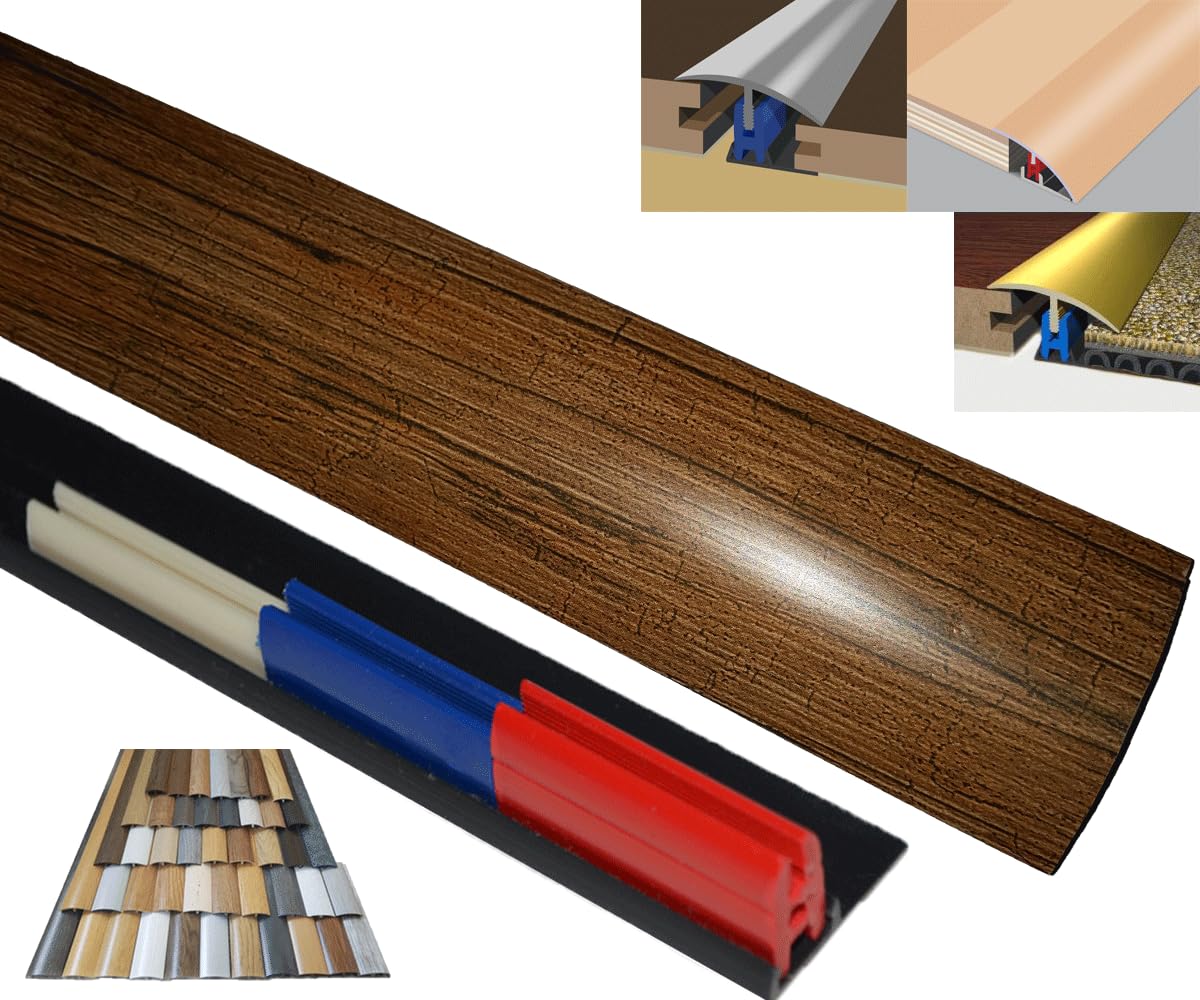

An adhesive threshold uses a hidden fixing system rather than visible screws. One of the most advanced examples is the Easyclip threshold system which combines a strong adhesive base with a clip-on top profile.
Instead of drilling into the floor, the base is fixed in place and the top section clips securely over it.
Key benefits of adhesive (Easyclip) thresholds:
- No drilling required – perfect for avoiding damage to floors
- Ideal for underfloor heating – no risk of hitting pipes or cables
- Clean, screw-free finish – better aesthetics
- Works on uneven floors – adapts to different heights and surfaces
- Compatible with multiple floor types – laminate, vinyl, wood, and more
- Allows for expansion gaps – essential for floating floors
- Reusable base system – top strip can be replaced if needed
Many systems like Easyclip are designed to handle height differences, pivot points, and uneven joins, making them one of the most versatile threshold options available .
🔩 What Is a Screw-Fix Threshold?


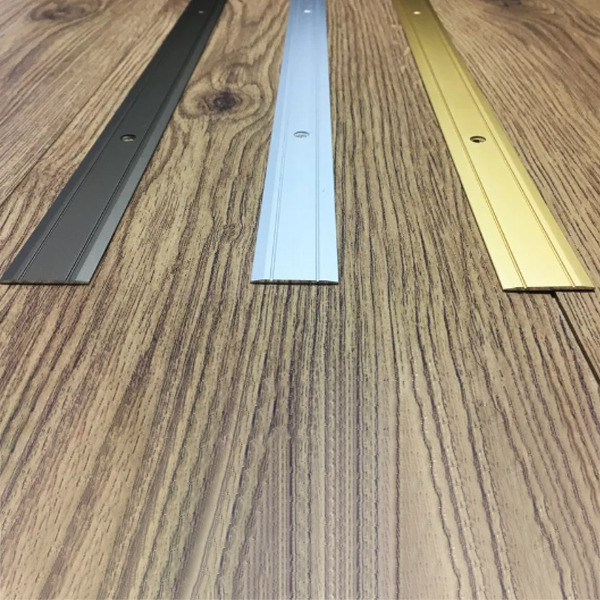
Screw-fix thresholds are the traditional option. They are secured by drilling directly into the subfloor and fastening the strip with screws.
You’ll often see these used with metal door bars or older-style flooring transitions.
Key benefits of screw-fix thresholds:
- Very strong and rigid fixing
- Good for heavy traffic areas
- Simple, familiar installation method
However, they come with some limitations—especially in modern homes.
⚖️ Adhesive vs Screw-Fix: Key Differences
| Feature | Adhesive (Easyclip System) | Screw-Fix Threshold |
|---|---|---|
| Installation | No drilling, quick fit | Requires drilling and tools |
| Finish | Clean, hidden fixing | Visible screws |
| Underfloor heating | ✅ Safe | ❌ Risk of damage |
| Floor compatibility | Works with uneven & mixed floors | Best on flat, solid subfloors |
| Adjustability | Flexible & multi-purpose | Fixed position |
| Maintenance | Replaceable top section | Full removal required |
🔥 Which One Should You Choose?
Choose an adhesive threshold (like Easyclip) if:
- You have underfloor heating
- You want a quick, DIY-friendly installation
- You need to cover uneven or different floor heights
- You prefer a modern, clean finish
- You’re working with laminate, LVT, or floating floors
👉 In most modern homes, this is the better all-round option.
Choose a screw-fix threshold if:
- You’re fitting onto solid subfloors like concrete or timber
- You need a permanent, heavy-duty fix
- Appearance is less important than rigidity
🧠 Pro Tip: Why Adhesive Systems Are Replacing Screws
Modern flooring needs to expand and move naturally, especially with laminate and vinyl. Systems like Easyclip are designed to:
- Allow movement without damage
- Prevent cracking or lifting
- Maintain a secure fit without restricting the floor
They also remove one of the biggest risks in flooring installation—drilling into hidden pipes or heating systems.
✅ Final Verdict
While both options have their place, adhesive threshold systems clearly offer more flexibility, safety, and ease of installation.
For most homes—especially those with modern flooring—clip-based systems like Easyclip are the smarter choice.
If you’re looking for a threshold that’s:
- Easy to install
- Compatible with all floor types
- Safe for underfloor heating
- And designed for real-world flooring challenges
👉 The Easyclip adhesive threshold system is one of the most versatile solutions available.