



How to Join Two Different Floors in a Doorway

How to Join Two Different Floors in a Doorway
When two rooms have different flooring, the join in the doorway needs to be neat, secure, and able to handle movement in the floor. A door threshold strip is designed to cover the gap between floors, protect the edges of the flooring, and create a smooth transition between rooms.
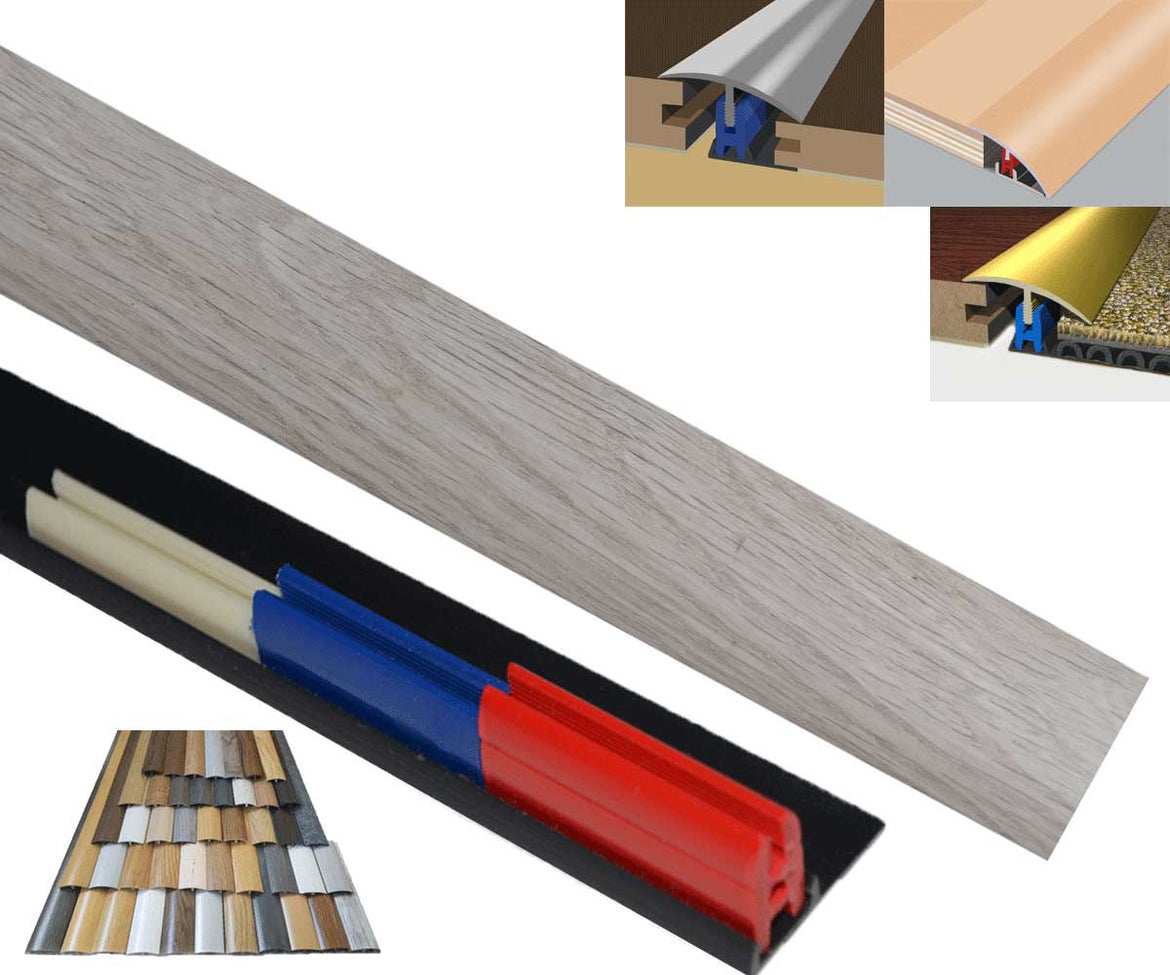
Many flooring combinations can be joined using a single type of threshold system. Syntech EasyClip thresholds are designed to work with a wide range of floor types, making them a versatile solution for most interior doorways.
This guide explains how to join different floors in a doorway and which flooring combinations can be accommodated using an EasyClip threshold.
Why Doorway Thresholds Are Important
A doorway is one of the most common places where two different flooring materials meet. Because each material expands, contracts, or flexes differently, a small gap is usually required between the floors.
A threshold strip helps by:
-
Covering expansion gaps between flooring materials
-
Protecting exposed flooring edges
-
Creating a clean transition between rooms
-
Reducing the risk of trips or uneven edges
-
Allowing floors to expand naturally
Without a threshold strip, the edges of laminate, wood, or tile can become damaged over time.
Flooring Combinations EasyClip Thresholds Can Join
One advantage of the EasyClip threshold system is that it works with many common flooring combinations found in modern homes. This makes it suitable for both renovations and new installations.
Laminate to Laminate

Joining laminate flooring between two rooms is very common. Even when the same flooring is used throughout a property, a threshold strip may still be needed in the doorway to allow for expansion gaps.
An EasyClip threshold sits neatly over the join, covering the gap while allowing the floor to move naturally.
Laminate to Tile or Stone

Laminate often meets tile or stone flooring in areas such as kitchens, bathrooms, and hallways.
These materials typically sit at slightly different heights. An EasyClip threshold provides a clean transition between the two surfaces while protecting the edge of the laminate floor.
This combination is commonly used for:
-
Living room to kitchen transitions
-
Hallways leading into tiled areas
-
Laminate flooring meeting stone or ceramic floors
Tile to Tile

When two tiled rooms meet, a threshold strip can help cover the joint between the floors and create a tidy finish in the doorway.
This is particularly useful if:
-
Different tile styles meet in the doorway
-
A movement joint is required
-
The tiles were installed at different times
An EasyClip threshold can bridge the join while keeping the doorway looking clean and professional.
Laminate to Carpet

Transitions between laminate and carpet are very common in homes. For example, laminate may be used in hallways while carpet is used in bedrooms or living rooms.
A threshold strip covers the join and secures the carpet edge while protecting the laminate flooring.
This helps prevent:
-
Carpet edges fraying
-
Laminate edges chipping
-
Uneven floor joins
Laminate to Vinyl

Vinyl flooring is often used in kitchens, bathrooms, or utility rooms, while laminate flooring is used in surrounding living spaces.
An EasyClip threshold can neatly cover the gap between these two floors and provide a smooth transition between the materials.
Laminate to Wood

Laminate and wood flooring can look very similar, but they still require an expansion gap where the two floors meet.
An EasyClip threshold strip helps create a seamless transition while protecting the edges of both floors.
Wood to Carpet

Wood flooring often transitions into carpeted bedrooms or living spaces. A threshold strip holds the carpet edge in place while covering the expansion gap next to the wood floor.
This creates a durable and tidy doorway finish.
Flooring Combinations EasyClip Thresholds Are Not Designed For
While EasyClip thresholds are suitable for many floor types, they are not designed for very low-level flooring combinations.
For example:
-
Vinyl to vinyl
-
Carpet to vinyl
These floors typically sit very close to the subfloor and may require a different type of transition strip designed for low-profile flooring.
How to Install a Threshold in a Doorway
Installing a threshold strip is usually a straightforward process.
1. Measure the Doorway
Measure the width of the doorway where the two floors meet. Threshold strips can usually be cut to length using a fine-tooth saw.
2. Leave the Correct Expansion Gap
Hard flooring such as laminate or wood should always have a small expansion gap near the doorway. This allows the floor to expand and contract with changes in temperature and humidity.
3. Position the EasyClip Base
The EasyClip system uses a base that is fixed to the floor, typically with screws or adhesive depending on the subfloor.
4. Clip the Threshold Cover Into Place
Once the base is secured, the threshold cover clips into position, creating a clean and secure transition between the two floors.
Final Thoughts
Joining two different floors in a doorway is an important finishing step in any flooring installation. Using a threshold strip ensures the join looks professional while protecting the edges of the flooring.
Because EasyClip thresholds can accommodate a wide range of flooring combinations—including laminate, tile, stone, vinyl, wood, and carpet—they offer a versatile solution for most interior doorways.
With the correct threshold installed, the transition between rooms becomes both durable and visually seamless.