



How to Join Laminate Flooring in a Doorway | Threshold Strip Guide

How to Join Laminate Flooring in a Doorway
Joining laminate flooring in a doorway is one of the most common challenges during installation. Doorways are where two floors meet, and they must allow for expansion movement while still creating a neat transition between rooms.
The most reliable way to join laminate floors in a doorway is by using a door threshold strip, which covers the expansion gap and protects the edges of the flooring.
If you are joining two different types of flooring, such as laminate and tile or laminate and carpet, you may also find our guide on How to Join Two Different Floors in a Doorway helpful:
This guide explains why laminate flooring needs a doorway transition and how to install it correctly.
Why Doorways Need a Flooring Transition
Laminate flooring is installed as a floating floor, meaning it is not fixed directly to the subfloor. Because of this, the floor must be able to expand and contract as temperatures and humidity change.
A doorway is one of the most important places where expansion gaps are required.
A threshold strip helps by:
-
Covering the expansion gap between floors
-
Protecting the edges of laminate boards
-
Allowing each room's flooring to move independently
-
Creating a clean transition between rooms
If you want a more detailed explanation of expansion gaps, you can read our full guide:
👉 Laminate Flooring Expansion Gap Guide
Without a proper doorway transition, laminate floors can push against each other and lift or buckle over time.
Two Ways to Join Laminate Flooring in a Doorway
Continuous Flooring Through the Doorway
In this method, the laminate flooring continues from one room into the next without a threshold strip.
While this can create a seamless appearance, it has a few limitations:
-
Expansion movement between rooms is restricted
-
Large floor areas may require additional expansion joints
-
Installation is more difficult
Because of these factors, many installers prefer to use a threshold strip in the doorway. uneven floor transition strip.
Using a Door Threshold Strip
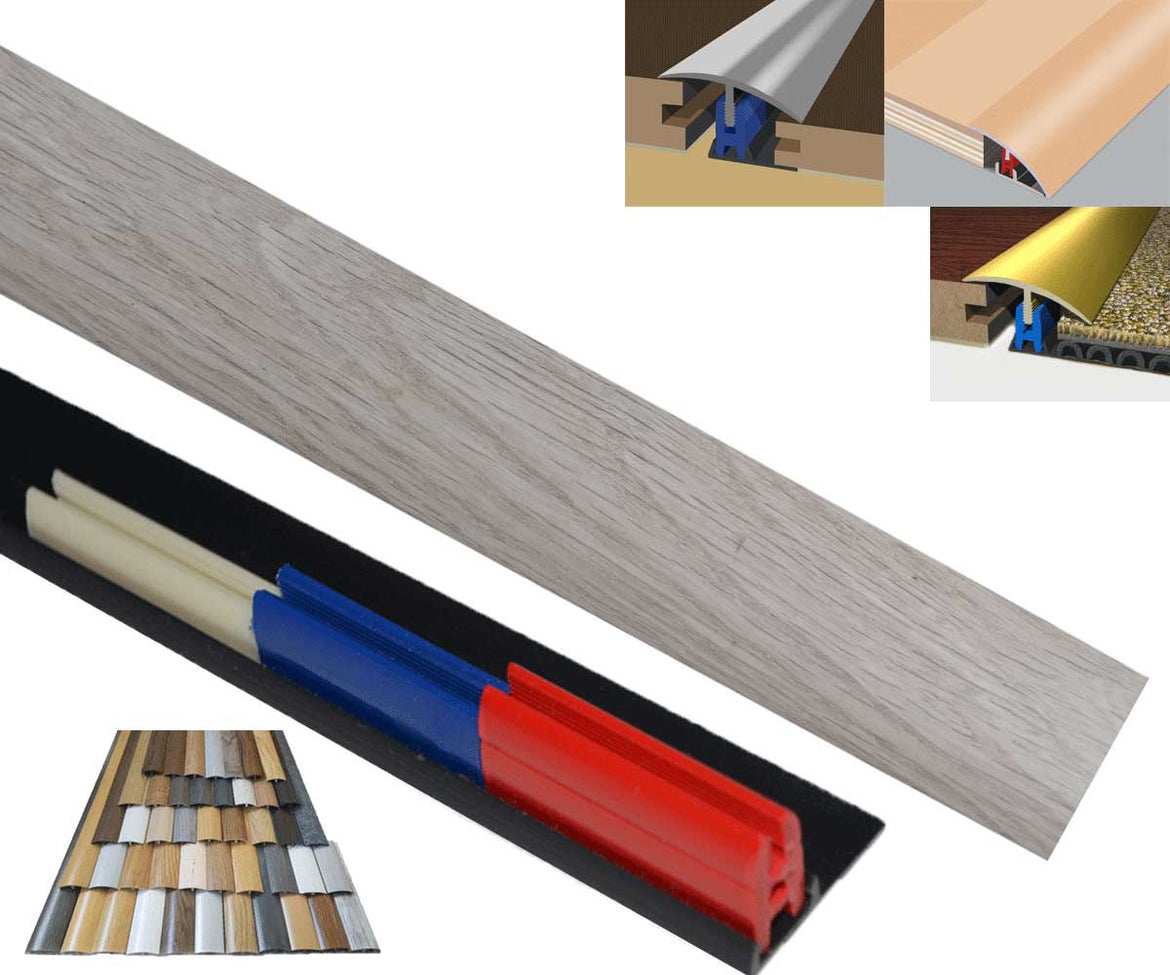
A threshold strip sits over the gap between the laminate floors in each room.
This allows the floors to expand independently while still creating a neat transition in the doorway.
Threshold strips are also used when joining laminate to other flooring types. For example, if laminate meets carpet in a bedroom doorway, you may want to read our guide on:
👉 A Guide to Easyclip Thresholds Strips and Their Uses.
Where Should the Threshold Sit in the Doorway?
The best position for a threshold strip is directly under the centre of the door.
This means:
-
When the door is closed, the transition is hidden
-
Each room shows its own flooring
-
The doorway looks neat and symmetrical
Positioning the threshold correctly also ensures the expansion gap is covered properly.
If you are unsure which width threshold is best for your doorway, our guide explains the options in detail:
👉 What Size Door Threshold Strip Do I Need
How to Join Laminate Flooring in a Doorway (Step-by-Step)
1. Install Laminate in the First Room
Begin installing laminate flooring in the first room as normal, leaving the recommended expansion gap near the doorway.
Most laminate floors require an 8–10 mm expansion gap.
If you are unsure how expansion gaps work, see:
👉 Laminate Flooring Expansion Gap Guide
2. Measure the Doorway
Measure the width of the doorway and cut the threshold strip to the correct length.
Threshold strips can usually be cut using a fine-tooth saw.
3. Install the Threshold Base
Many modern threshold systems use a clip-in base track that is fixed to the subfloor.
The base should sit centrally within the doorway and align with the expansion gap between the two floors.
For a full installation walkthrough, see:
👉 How to Install an EasyClip Door Threshold
4. Install Laminate in the Second Room
Install the laminate flooring in the second room, again leaving the correct expansion gap where it meets the threshold base.
5. Clip the Threshold Cover Into Place
Once both floors are installed, the threshold cover can be clipped into the base track.
This creates a clean transition while hiding the expansion gap between the laminate floors.
Common Laminate Doorway Problems
Laminate Flooring Lifting in the Doorway
This often happens when expansion gaps are too small or when the flooring from two rooms pushes against each other.
A doorway threshold strip allows each floor to move independently and helps prevent this issue.
👉 Floor height difference doorway.
Uneven Flooring Between Rooms
If the subfloor height differs slightly between rooms, a threshold strip can help bridge the transition and create a smoother join.
For transitions between laminate and tiles, you may find this guide helpful:
👉 Laminate to Tile Transition Guide
Gaps Appearing Between Floors
If laminate floors are installed separately without a threshold strip, gaps may appear over time.
Installing a threshold strip can cover the gap and restore a tidy doorway finish.
Choosing the Right Threshold for Laminate Flooring
For laminate flooring joins, threshold strips are usually chosen based on:
-
Width of the expansion gap
-
Height difference between floors
-
Flooring materials meeting in the doorway
For most laminate-to-laminate transitions, a standard threshold strip width of around 40–50 mm provides good coverage.
You can learn more about selecting the correct width in our guide:
👉 What Size Door Threshold Strip Do I Need
Final Thoughts
Joining laminate flooring in a doorway is an important step in any flooring installation. By leaving the correct expansion gap and using a suitable threshold strip, you can ensure the flooring remains stable and the transition between rooms looks clean and professional.
A properly installed doorway threshold allows laminate floors in different rooms to move independently while protecting the edges of the boards and maintaining a tidy finish.
If you are joining laminate with other flooring materials, our guide on How to Join Two Different Floors in a Doorway explains the best transition options for different floor types.
👉 How to Join Two Different Floors in a Doorway