



The Best Threshold for Uneven Floors – Problem Solved
Uneven floors are one of the most common problems when installing flooring between rooms. Whether you are joining laminate to tile, vinyl to carpet, or two hard floors with different heights, finding a threshold strip that looks professional and performs properly can be difficult.
Traditional metal thresholds often create visible gaps, rigid pressure points, and poor transitions on uneven subfloors. They can rock, lift, or fail to sit flush across the doorway. This is where the Easyclip Threshold System stands out as one of the best solutions available.
If you are trying to understand how to transition between different floor heights, choosing the right threshold system is essential.
Why Uneven Floors Cause Problems
Floor levels rarely match perfectly between rooms. Common causes include:
- Different flooring thicknesses
- Uneven screeds or subfloors
- Older properties with settlement
- Variations in underlay depth
- Tile adhesive build-up
- Concrete inconsistencies
When a rigid threshold is installed over uneven flooring, several issues can occur:
- Visible gaps under the strip
- Poor fitting edges
- Movement and rattling
- Premature wear
- Trip hazards
- Difficulty securing the threshold properly
A threshold designed for flexibility is essential.
Why the Easyclip Threshold System Is the Best Solution
The Easyclip Threshold System has become a popular solution for uneven floors because it solves problems that traditional threshold strips cannot.
You can also learn more about the benefits of an adhesive clip-in threshold system and why it offers a cleaner, more secure installation.
Flexible PVC Construction
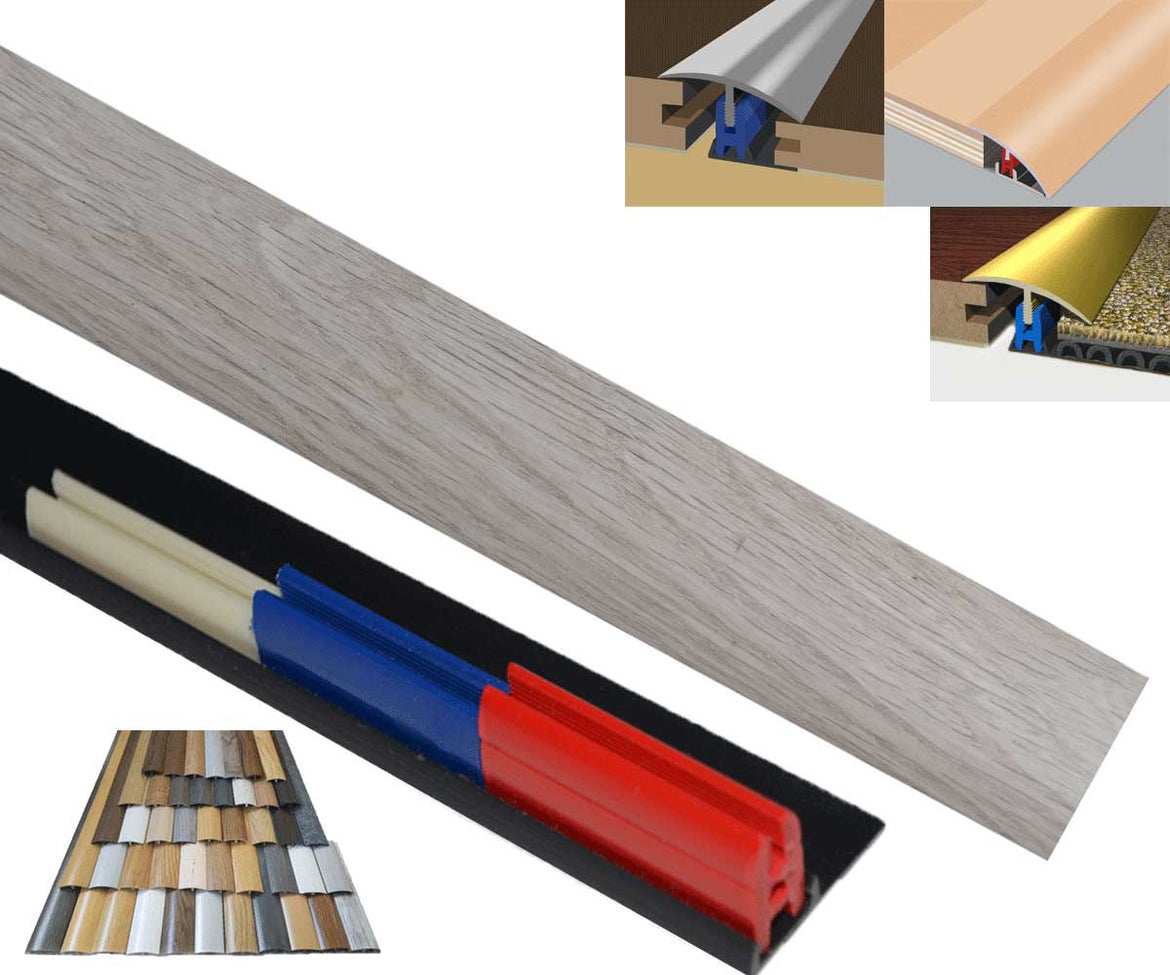
Unlike rigid aluminium or solid wood trims, Easyclip thresholds use a PVC cover profile which provides natural flexibility.
This flexibility allows the threshold to:
- Follow slight floor irregularities
- Sit flush across uneven surfaces
- Reduce rocking or lifting
- Create a cleaner finish
- Improve long-term durability
Because the threshold can flex slightly along its length, it adapts far better to imperfect floors than rigid systems.
If you want to understand the advantages further, read about the benefits of PVC threshold strips for modern flooring installations.
Adjustable Clip System for Different Heights
One of the biggest advantages of the Easyclip system is the interchangeable clip design.
Different clip sizes can be used beneath the same threshold cover, allowing installers to:
- Reduce height gradually across the doorway
- Accommodate varying floor levels
- Fine-tune the transition
- Create smoother joins between surfaces
This is especially useful where floor heights vary along the width of the doorway — something that frequently happens in older homes or renovations.
Instead of forcing a rigid threshold into place, Easyclip allows the installer to adapt the support height underneath the strip.
The result is:
- Better floor contact
- Improved appearance
- Reduced movement
- A safer transition between rooms
Ideal for Many Flooring Types
Easyclip thresholds work well with:
- Laminate flooring
- LVT flooring
- Vinyl flooring
- Engineered wood
- Carpet transitions
- Tile to laminate joins
- Floating floors
Because the system is designed to accommodate movement and variation, it is particularly effective with modern floating floors.
For homeowners finishing laminate edges and expansion gaps, this guide to floor edge trim solutions may also be useful.
Cleaner Appearance
Many homeowners choose Easyclip because it provides a more professional finish.
Benefits include:
- Hidden fixing system
- No visible screws
- Smooth curved profiles
- Modern appearance
- Multiple finishes available
The concealed clip system creates a cleaner, higher-end result compared to traditional screw-fixed metal thresholds.
Better Durability Over Time
Uneven floors place constant stress on thresholds.
Rigid trims often:
- Bend
- Lift at the edges
- Crack
- Loosen over time
The flexible PVC construction of Easyclip helps absorb small movements and pressure changes, making it more durable in real-world installations.
Common Problems Solved by Easyclip Thresholds
Problem: One Side of the Floor Is Higher
Easyclip allows different clip heights to be used to gradually compensate for floor level differences.
Problem: The Floor Dips in the Middle
The flexible PVC cover can follow slight floor contours better than rigid metal trims.
Problem: Threshold Keeps Lifting
The clip system provides more even support along the threshold length.
Problem: Traditional Threshold Looks Uneven
Easyclip creates a smoother, more consistent finish across imperfect floors.
Why Flexible Thresholds Matter
Many people underestimate how much floors move.
Factors like:
- Temperature changes
- Expansion and contraction
- Foot traffic
- Building movement
all affect flooring transitions.
A flexible threshold system performs better because it can accommodate these small changes naturally.
This is one reason why PVC threshold systems are becoming increasingly popular in modern flooring installations.
How To Install an Easyclip Threshold
One of the major advantages of the Easyclip system is its simple installation process. The adhesive base and clip-in design remove the need for visible screws and complicated drilling.
You can follow this full guide on how to fit an Easyclip threshold for step-by-step installation instructions.
Questions and Answers
You can read more about threshold strips for different floor levels here.
What threshold works best between laminate and tile?
A flexible reducer threshold works best between laminate and tile because it can accommodate expansion movement and varying floor heights.
Why does my threshold rock or move?
Thresholds often rock because the floor underneath is uneven or because the threshold is too rigid. Flexible systems with adjustable support clips reduce this issue significantly.
Are PVC thresholds better than aluminium thresholds?
PVC thresholds are often better for uneven floors because they offer flexibility and can adapt to small floor variations. Aluminium thresholds are more rigid and may not sit flush on imperfect surfaces.
Can threshold strips fix height differences?
Threshold strips cannot completely level a floor, but they can safely and neatly bridge small differences in floor height.
What is a reducer threshold?
A reducer threshold is a transition strip designed to join two floors with different heights by creating a gradual slope between them.
Are screwless thresholds better?
Screwless or hidden-fix thresholds provide a cleaner appearance and reduce visible fixings. Clip-based systems also tend to distribute pressure more evenly.
What flooring threshold is best for floating floors?
Flexible clip-in threshold systems are ideal for floating floors because they allow for natural floor expansion and movement.
Final Thoughts
Uneven floors can make flooring transitions difficult, but the right threshold system makes a huge difference.
The Easyclip Threshold System solves many of the common problems associated with uneven floors through:
- Flexible PVC construction
- Adjustable clip heights
- Hidden fixings
- Better floor adaptation
- Improved durability
- Cleaner appearance
For homeowners, installers, and flooring professionals looking for a reliable threshold solution for uneven floors, Easyclip is one of the most effective and versatile systems available today.