



How to Cover Laminate Expansion Gaps
How to Cover Laminate Expansion Gaps
When installing laminate flooring, leaving an expansion gap around the perimeter of the room is essential. This small gap allows the flooring to expand and contract naturally as temperature and humidity levels change. Without it, laminate boards can push against walls or fixed objects, leading to lifting, buckling, or joint damage.
However, once the flooring is installed, the expansion gap should not remain visible. Covering it properly ensures the floor looks clean, professional, and finished while still allowing the necessary movement. In this guide, we explain how to cover laminate expansion gaps correctly and which trims work best.
What Is a Laminate Expansion Gap?
An expansion gap is the space left between laminate flooring and surrounding walls or fixed structures during installation. Most laminate flooring manufacturers recommend leaving a gap of around 8–10mm to allow for natural movement in the flooring.
Laminate boards are made from compressed wood fibres and decorative layers, which means they can slightly expand when humidity increases and contract when the air becomes dry. The expansion gap prevents pressure from building up between the flooring and the surrounding walls.
This gap is usually hidden beneath finishing trims such as skirting boards, beading, or threshold strips.
Why Expansion Gaps Must Be Covered
Although expansion gaps are necessary for flooring performance, they should not be visible in the finished room.
Covering the gap provides several benefits:
-
Creates a clean, professional appearance
-
Protects the edges of the laminate boards
-
Prevents dirt and debris from collecting along the edge
-
Allows the floor to expand and contract without obstruction
Using the correct trim ensures the gap is hidden while still allowing the flooring to move freely.
Best Ways to Cover Laminate Expansion Gaps
There are several common methods used to conceal expansion gaps around laminate flooring. The best option depends on the layout of the room and whether existing skirting boards are being replaced.
Skirting Boards
Skirting boards are one of the most traditional and effective ways to cover expansion gaps.
During installation, laminate flooring is laid up to the wall while maintaining the expansion gap, and the skirting boards are installed afterward. The skirting overlaps the gap, hiding it completely while leaving enough space underneath for floor movement.
This method creates a seamless look and is often preferred when renovating a room where skirting boards are being replaced.
Scotia Beading (Quarter Round Trim)
If existing skirting boards are already installed and you do not want to remove them, scotia beading is a common solution.
Scotia trim is a small curved moulding fitted along the bottom of the skirting board. It sits over the expansion gap, covering it neatly while still allowing the laminate floor to move.
Many laminate flooring installations use scotia beading because it is quick to install and available in colours designed to match flooring finishes such as oak, walnut, or grey tones.
Floor Edge Trim
Floor edge trim is another effective solution, particularly in areas where the laminate floor meets another surface or open edge.
Edge trims are designed to:
-
Hide expansion gaps
-
Protect the exposed edges of flooring
-
Provide a neat finishing detail
They are commonly used where laminate flooring meets sliding doors, patio doors, or areas where skirting boards are not present.
Door Threshold Strips
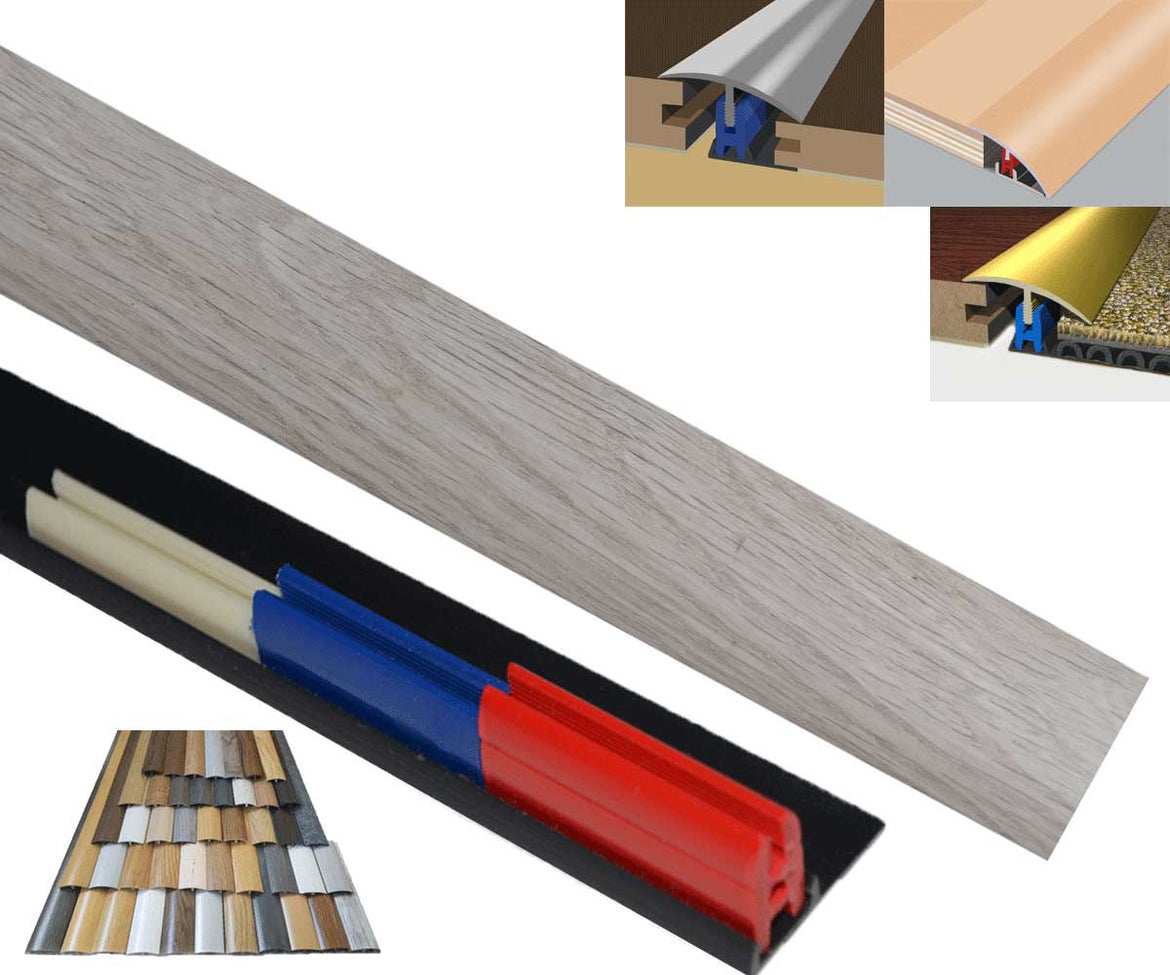
At doorways, expansion gaps are usually covered using door threshold strips. These trims create a smooth transition between two flooring surfaces while concealing the gap beneath.
Threshold strips are commonly used for:
-
Laminate to carpet transitions
-
Laminate to laminate transitions
-
Laminate to tile transitions
-
Doorway floor joins
They not only hide expansion gaps but also improve safety by preventing exposed edges that could become a trip hazard.
Tips for a Professional Finish
To achieve the best results when covering laminate expansion gaps, consider the following tips:
Choose matching trims
Many trims are available in finishes designed to complement laminate flooring colours, helping create a seamless appearance.
Do not fix trims to the laminate flooring
Trims should always be fixed to the wall, skirting board, or subfloor—not the laminate boards. Fixing them to the flooring can prevent natural movement.
Maintain consistent spacing
Ensure the expansion gap remains consistent around the room to prevent pressure points.
Measure doorways carefully
Threshold strips should fully cover the expansion gap while providing a smooth transition between flooring types.
Common Mistakes to Avoid
Several common installation mistakes can affect the performance of laminate flooring.
One of the most frequent issues is filling the expansion gap with silicone or sealant. This prevents the floor from expanding properly and can cause the boards to lift or buckle.
Another mistake is installing trims too tightly against the flooring, which restricts movement. Always allow a small amount of space beneath the trim to accommodate expansion.
Final Thoughts
Expansion gaps are an essential part of any laminate flooring installation. They allow the floor to respond naturally to changes in temperature and humidity, preventing long-term damage such as buckling or warping.
Although these gaps must be present, they should never remain visible. Using the right finishing trims—such as skirting boards, scotia beading, edge trims, or threshold strips—ensures the floor looks neat while maintaining proper functionality.
By covering laminate expansion gaps correctly, you can achieve a professional finish that keeps your flooring looking great and performing reliably for years to come.