



How to Transition Between Different Flooring Heights
The Best Ways to Create a Smooth, Professional Floor Transition

Different flooring heights are one of the most common challenges during flooring installation. Whether you are joining laminate to tile, vinyl to carpet, or wood to stone, uneven floor levels can create awkward gaps, unsafe edges, and an unfinished appearance if the correct threshold system is not used.
The good news is that modern door threshold systems are designed specifically to overcome these issues — and flexible multi-purpose systems now make it easier than ever to achieve a clean, safe transition between different floor heights.
In this guide, we’ll explain:
- Why flooring height differences happen
- The problems caused by poor transitions
- The best threshold options for uneven floors
- How flexible threshold systems solve common installation issues
- Why multi-purpose Easyclip systems are becoming increasingly popular
You can explore the full range of threshold systems at Syntech Plastics.
Why Do Flooring Heights Differ?
Different floor coverings naturally have different thicknesses.
For example:
- Tile floors are often higher than laminate
- Carpet with underlay sits differently to vinyl
- Engineered wood may sit higher than LVT
- Subfloors may not be perfectly level
Floor height differences can also occur because:
- New flooring is installed over old flooring
- Underlays vary in thickness
- Concrete floors are uneven
- Floors settle over time
Without a suitable threshold, these changes in height can create unsafe or unattractive transitions.
Problems Caused by Poor Floor Transitions
An incorrect transition between flooring heights can lead to:
- Trip hazards
- Flooring edge damage
- Gaps between floors
- Movement and lifting
- Premature flooring wear
- Difficulties with wheelchairs, trolleys, or pushchairs
Poor transitions also make the entire flooring installation look unfinished.
What Type of Threshold Is Best for Different Floor Heights?
The best threshold depends on:
- The height difference
- The flooring materials
- The amount of movement between floors
- Traffic levels
- Whether the floor is perfectly level
In many homes, standard flat thresholds simply cannot handle uneven floors effectively.
This is where flexible multi-purpose systems offer a major advantage.
Why Flexible Threshold Systems Work Better
Traditional thresholds are often rigid and designed only for perfectly level floors.
However, modern flooring installations are rarely perfectly even.
Flexible systems can:
- Pivot between floor heights
- Adapt to slight movement
- Handle uneven subfloors
- Reduce pressure on flooring edges
- Create smoother transitions
This helps improve both appearance and long-term durability.
How Easyclip Threshold Systems Handle Uneven Floors
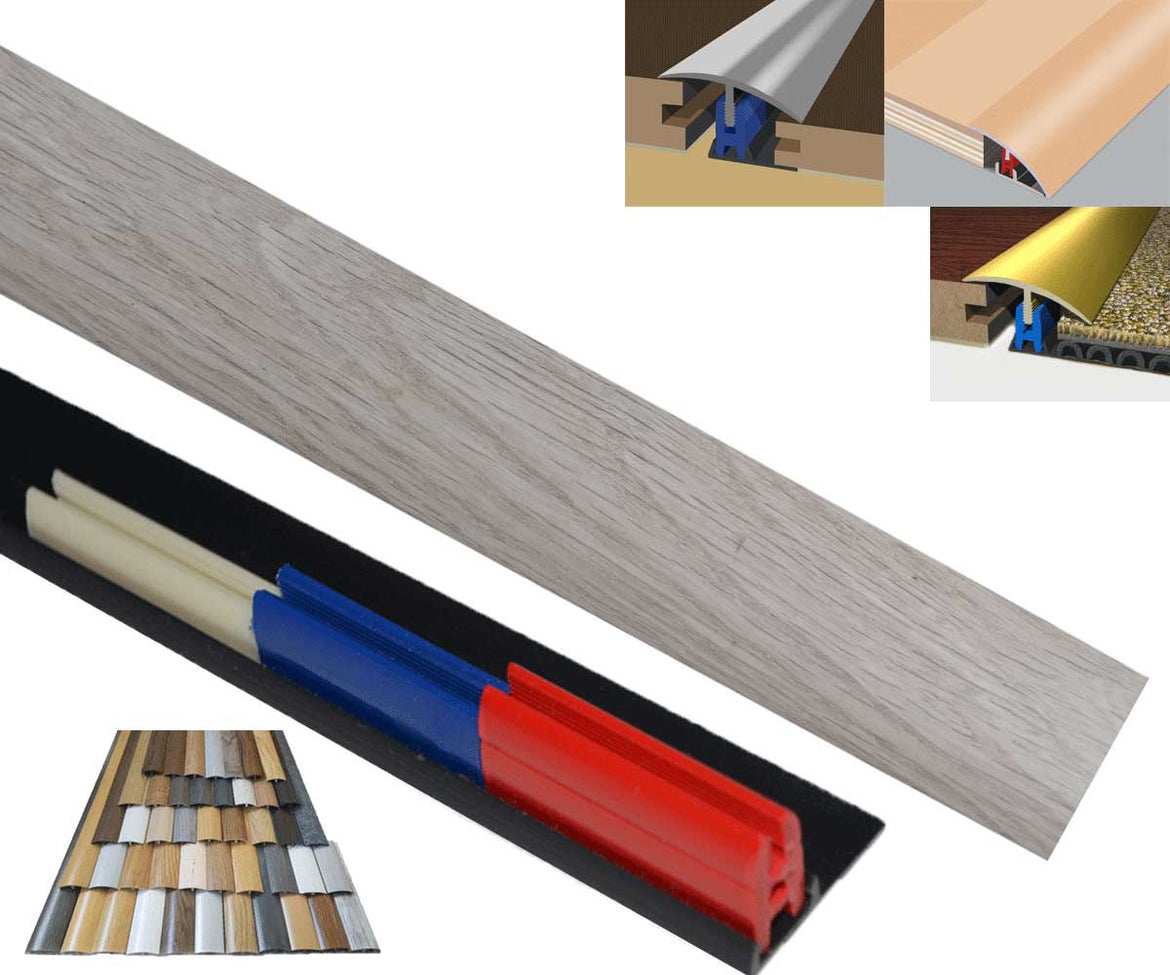
The Syntech Plastics Easyclip Threshold Systems are specifically designed to solve common flooring transition problems.
Unlike many standard door bars, Easyclip systems are:
- Multi-purpose
- Adjustable
- Flexible
- Suitable for uneven floors
- Designed to pivot between height differences
The system allows the top profile to adapt more naturally to flooring variations, helping create a cleaner and safer finish.
Why Easyclip Thresholds Are More Versatile
Many standard thresholds are limited to one specific flooring height or transition type.
Easyclip systems are different because they can:
- Join multiple flooring types
- Handle varying floor levels
- Pivot where floors are uneven
- Work with underfloor heating
- Cover expansion gaps
- Provide hidden fixing systems
According to Syntech Plastics, the Easyclip system is designed to “pivot as needed to seamlessly connect floors of all types, heights, and levels.”
Some Easyclip systems can also accommodate significant floor height variations while maintaining a smooth surface transition.
Common Flooring Height Transitions
Laminate to Tile
One of the most common uneven transitions.
Tile floors are usually higher, making reducer or flexible thresholds ideal.
Vinyl to Carpet
Carpet compresses under weight, so thresholds need some flexibility to maintain a neat edge.
Wood to Stone
Natural stone can vary slightly in height across the doorway.
Flexible threshold systems help absorb these inconsistencies.
Uneven Subfloors
Even when flooring materials are similar, subfloors themselves may slope or vary slightly.
Pivoting thresholds help compensate for these imperfections.
Hidden Fixing Systems Create a Cleaner Finish
Modern Easyclip thresholds use concealed fixing systems rather than visible screws.
Benefits include:
- Cleaner appearance
- Reduced trip risks
- Easier cleaning
- Improved durability
- More modern finish
Easyclip systems use a base profile with a clip-on top section for secure installation.
Are Flexible Thresholds Better for Underfloor Heating?
In many cases, yes.
Rigid thresholds may struggle with the expansion and contraction caused by temperature changes.
Flexible systems are often better suited because they allow controlled movement without stressing the flooring edges.
Syntech Plastics specifically highlights the suitability of Easyclip thresholds for underfloor heating installations.
DIY Installation Benefits
Many homeowners prefer Easyclip systems because they simplify installation.
Depending on the system, benefits may include:
- No visible screws
- Reduced drilling
- Easier alignment
- Faster fitting
- Better adaptability to uneven floors
Some Easyclip systems also use strong adhesive fixing bases, reducing the need for complicated installation methods.
Choosing the Right Threshold Width
Wider thresholds are often better for larger floor height differences because they create a gentler slope.
Common options include:
- 38mm
- 40mm
- 50mm
Wider profiles may improve:
- Safety
- Accessibility
- Appearance
- Wheelchair access
Frequently Asked Questions
What is the best way to transition between different flooring heights?
The best solution is to use a flexible threshold system designed to handle uneven floors and varying floor levels. Multi-purpose systems such as Easyclip thresholds can pivot and adapt to different flooring heights, creating a smoother and safer transition.
Can one threshold work for different floor types?
Yes. Modern multi-purpose thresholds are designed to work with a wide range of flooring combinations, including:
- Laminate to tile
- Vinyl to carpet
- Wood to stone
- LVT to laminate
Flexible systems are especially useful where floor heights vary slightly.
What happens if flooring heights are uneven?
Uneven flooring heights can create:
- Trip hazards
- Gaps between floors
- Damaged flooring edges
- Loose threshold bars
- Poor visual appearance
Using a pivoting or reducer threshold helps create a gradual transition between levels.
Are Easyclip thresholds suitable for uneven floors?
Yes. Easyclip threshold systems are specifically designed to adapt to uneven floors and varying height differences. The flexible pivoting design helps create a cleaner fit than many traditional rigid threshold bars.
Do I need a reducer threshold for different floor levels?
In many cases, yes. Reducer-style thresholds are ideal when one floor sits higher than the other because they create a smoother slope and reduce trip risks.
Are threshold bars suitable for underfloor heating?
Flexible threshold systems are often better suited for underfloor heating because they can accommodate slight floor movement caused by expansion and contraction.
Can I install a threshold myself?
Most modern threshold systems are DIY friendly. Clip-in and hidden-fix systems are designed for easier installation and often require fewer tools than traditional screw-fixed door bars.
What width threshold should I choose?
Wider thresholds are generally better for larger height differences because they create a more gradual transition. Common sizes include:
- 38mm
- 40mm
- 50mm
The ideal width depends on the flooring types and level difference.
Final Thoughts
Transitioning between different flooring heights does not have to result in awkward joins or unsafe doorways.
Modern multi-purpose threshold systems now make it possible to create smooth, professional transitions even when floors are uneven or different materials are used.
Flexible systems such as the Easyclip Threshold Range from Syntech Plastics are designed specifically to overcome the limitations of traditional rigid door bars.
Their ability to pivot, adapt to uneven floors, handle multiple flooring types, and cover varying height differences makes them one of the most versatile flooring transition systems available today.