


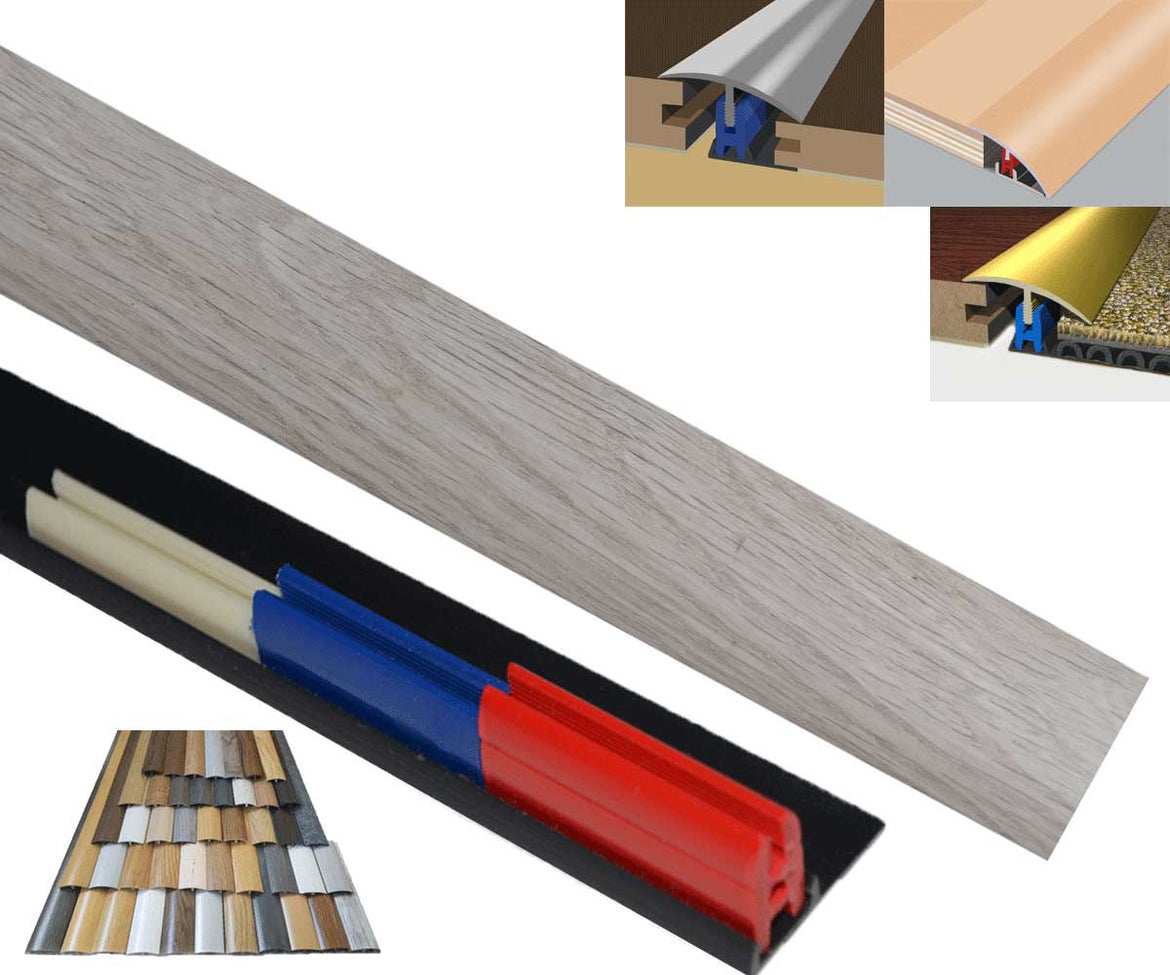

Floor Edge Trim vs Beading: What’s the Difference?

Floor Edge Trim vs Beading: What’s the Difference?
When finishing a new laminate, vinyl, or wood floor, the small details make a big difference. Two commonly confused finishing products are floor edge trim and beading (also called scotia trim). While they may look similar at first glance, they serve very different purposes.
If you’re unsure which one you need, this guide will explain the differences, when to use each, and how to choose the right option for your project.
What Is Floor Edge Trim?

Floor edge trim (sometimes called an end trim, room edge or finishing trim) is used to neatly finish the exposed edge of flooring where it meets another surface often the gap between the skirting board.
You’ll commonly see it:
-
Between laminate and carpet
-
Where flooring meets a door frame
-
At patio or external doors
-
Along edges of the skirting boards
-
Around hearths or fixed units
What Does It Do?
-
Covers expansion gaps
-
Protects flooring edges from chipping
-
Creates a smooth, safe transition
-
Improves the overall finished look
Many modern options, like PVC self-adhesive trims, are quick to install and require no screws — making them ideal for DIY projects.
What Is Beading (Scotia Trim)?


Beading, often referred to as scotia trim, is a small, curved moulding fitted along the edge of the room where flooring meets skirting boards.
Its main job is to hide the expansion gap left around the perimeter of laminate or engineered wood flooring.
Why Is an Expansion Gap Needed?
Laminate and wood flooring naturally expand and contract with temperature and humidity changes. Installers leave a small gap (usually 8–12mm) around the room’s edge to allow for this movement.
Beading simply covers that gap — it doesn’t secure the floor.
The Key Differences
Here’s a clear comparison:
| Feature | Floor Edge Trim | Beading (Scotia) |
|---|---|---|
| Purpose | Finishes exposed flooring edges & Gaps | Covers expansion gap at walls |
| Location | Doorways, open edges, transitions | Around room perimeter |
| Shape | Flat with a bull nose | Small curved moulding |
| Installation | Adhesive sticks to skirting | Pinned or glued to skirting |
| Function | Protects & transitions | Conceals gap only |
In short:
-
Edge trim = expansion gaps, transitions & protection
-
Beading = expansion gap cover
When Should You Use Floor Edge Trim?
Choose floor edge trim if:
-
Your flooring ends at a doorway
-
You’re joining two different floor types
-
There’s no skirting board present
-
You need a clean finish at an exposed edge
-
You want extra durability in high-traffic areas
For example, if laminate meets tile in a kitchen doorway, an edge trim creates a smooth, safe bridge between surfaces.
When Should You Use Beading?
Beading is needed when:
-
You’ve installed laminate or engineered wood flooring
-
Skirting boards were not removed before installation
-
You need to hide the expansion gap around the room
Some homeowners prefer to remove and refit skirting boards instead of using beading. However, beading is much quicker, more cost-effective, and far less disruptive.
Can You Use Both Together?
Yes — and in many cases, you will.
For example:
-
Beading is installed around the perimeter of the room.
-
Floor edge trim is used in the doorway.
They perform different roles and are not interchangeable.
Which Looks Better?
This often comes down to personal preference.
-
Beading gives a subtle, curved finish along skirting boards.
-
Edge trims create a defined, professional transition between surfaces.
Modern PVC options come in finishes like white, oak, dark oak, and grey — allowing you to match your flooring or skirting seamlessly.
Installation Differences
Floor Edge Trim Installation
-
Measure and cut to size
-
Place along gap
-
Remove adhesive film
-
Slide into place
Beading Installation
-
Cut at 45° angles for corners
-
Pin or glue to skirting (not the floor)
-
Fill nail holes if needed
One important tip: Never fix beading to the floor itself, as this can restrict expansion movement.
Common Mistakes to Avoid
-
❌ Using beading instead of a proper transition strip
-
❌ Screwing through laminate flooring
-
❌ Forgetting to leave an expansion gap
-
❌ Choosing the wrong colour finish
Taking time to choose the correct trim ensures your flooring lasts longer and looks professionally installed.
Final Thoughts
Although floor edge trim and beading may seem similar, they serve completely different purposes.
-
Use Floor edge trim to finish exposed flooring edges and create smooth transitions on standard 10mm gaps, some room edge profiles can cover larger gaps.
-
Use beading (scotia trim) to hide expansion gaps around the perimeter of a room larger than 15mm.
Understanding the difference will help you choose the right finishing product, improve durability, and achieve a clean, polished result.
If you're planning a flooring project, selecting the correct trim is just as important as choosing the flooring itself. The right finishing touch makes all the difference.